5 Ways to Earn Money as a Voice Actor

Maybe you’ve always been curious about voice acting, but you simply had no idea how to break into this industry. If you’re an aspiring voice actor, there are plenty of paths you can take. By reading blogs by voice actors like Johnny George, you can learn more about what it takes to succeed in this niche. Furthermore, here are some projects that need voice actors, as well as tips for starting your own business as a voice actor.

  1. Start Your Own Business

As a voice actor, you have several options for your career: you could work for a single company, contract with several agencies, or run your own business. Once you’ve gotten some experience under your belt and formed a solid network of industry connections, establishing your own business is a smart choice. You’ll have more control over your schedule, which projects you take on, and your finances. To launch your own company, you’ll need to create a business plan and choose a structure. For guidance, you can reference the ZenBusiness guide on how to start a company.

2. Commercials

When you think of voice acting, your mind might turn to animated films first. However, there’s ample voice acting work in commercials! Lots of commercials need voiceover tracks. Day Translations states that if you’re interested in doing voiceover work for commercials, you’ll need to master different forms of delivery for a “hard sell” and a “soft sell.” Make sure to include examples of both in your demo reel.

3. Films and Animated Movies

Naturally, many new voice actors want to eventually work on animated films or provide voiceover narration for live-action films. Of course, these roles will inevitably be more competitive – but it’s always worth auditioning just to see what happens

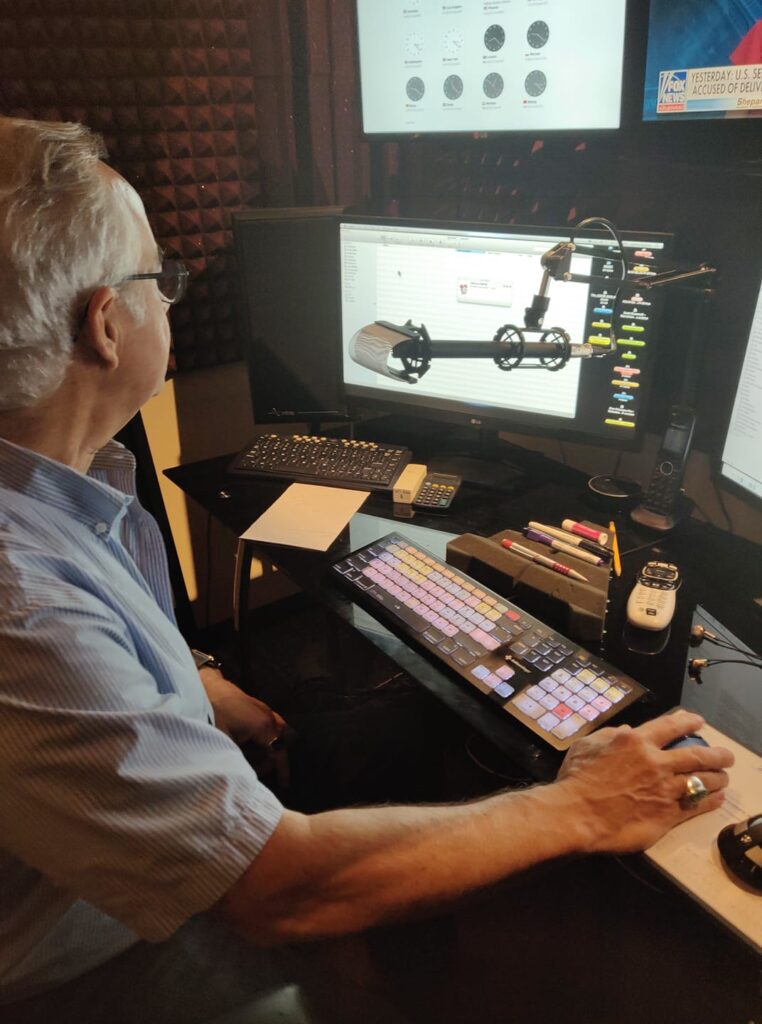
Try looking for short film projects in your area that need voice actors. This can be an easier way to get your foot in the door. If you anticipate working on any projects remotely, make sure to outfit a home studio with all of the equipment you’ll need. Backstage recommends investing in a microphone, a pop filter, headphones, an audio interface, and voice recording and editing software.

4. Audiobooks

Today, lots of people enjoy listening to audiobooks. While authors sometimes read their own audiobooks, they often hire voice actors for these projects instead! Personally, I have no interest, due to the tremendous amount of time needed to record, edit, proof, etc. This is only my opinion, while others find becoming an audiobook narrator as an exciting choice for many voice actors who want to go beyond working in film and commercials. Voquent states that if you want to narrate audiobooks, you’ll need to develop a wide range of accurate impressions and versatile tones to convey the emotions of different characters. It’s a good idea to practice these often – you may even want to work with a voice coach!

5. E-Learning and Training

Professional development programs that include videos almost always need voice actors to provide narration. This is an often-overlooked option for voice actors, but with new online training and certification videos being launched each day across every industry, you’ll find that there is a huge amount of work available in this niche. 

If you want to provide narration for e-learning programs and online training videos, how can you find projects? Look up companies that offer online education or professional certification programs and check their current job openings. You will also want to check out freelance job platforms, as this is where companies will advertise projects when they need contractors rather than new full-time employees.

Voice acting can seem like a mysterious industry. But truthfully, there is plenty of work out there for voice actors – you just need to know where to look! With these tips, you’ll be ready to explore different avenues for voice acting, including starting your own business.

Are you interested in pursuing a voice acting career? Get the advice you need from Johnny George. Browse the blog today for expert tips for breaking into voice acting.

Slow days = Opportunity Days

The “pandemic” is basically over. (until we hear otherwise) We’re now entering Summer. And out here in Arizona, that has a whole different meaning. Are you getting as many voice requests, auditions, etc?

Our industry is going through phases, just like any other corner of the business world. I’ve had several days of absolutely no work or auditions. But I’m not freaking out. That doesn’t mean no one want’s my voice. Doesn’t mean I’ve fallen off all Talent Rosters. Just be aware, my voice services are just not exactly what someone needs specifically right now.

I like to take advantage of these days and utilize these slower days to work on all those studio needs I never seem to find time to do.

  • Practice scripts,
  • Clean up studio
  • Organize all those studio cables & stuff on the floor
  • Have you sent out Thank You cards for your latest projects?
  • Do you Cold Call? If so, try about 5 each day.
  • Since everyone else is emailing, texting, etc. make a personal phone call to your clients to keep in touch.
  • Are you keeping up with your Blog? (Like this one)
  • Do you have time & money for Coaching? Now’s a good time.
  • Do you have a Mobile setup? If not, organize a solution and test it so you’re ready.
  • Take a vacation!
  • Spend more time with family.

Everyone will have different reasons for downtime. But these slow days create opportunities for you that you didn’t realize you had. Take advantage of this time.

By the way…if you are slow, just put out a notice that you are going to be “out of the studio” for a vacation and all of a sudden, work starts flowing in. Must be a trigger to clients, eh?

2022 and what it brings to another special year

Didn’t I just write a blog article on entering 2021? I do believe last year had so little and yet so much happening, that it simply flew by, and I didn’t offer many new avenues of my thoughts.

Believe it or not, in just a few years, (2025) I’ll hit another milestone. 50 years in the voice biz since I left college. Sure, glad I’ve taken care of myself and look through my eyes with the outlook of a 28-year-old.

With Phase Two of my life in gear, I’ve moved to the southwest to “The Valley of the Sun”, re-married and re-evaluated what I want to do, in order to check a few things off my Bucket List, I’ve hit a point of not generating as much VO marketing, but super-serving my core clients with the best and immediate voiceover service I can muster. Now, don’t get me wrong. I LOVE what I have been doing for years. Voicing it is My Thang. I just want to do it on MY schedule now and include more ME and US time. We still have a lot to see and do ya know…..

We will be welcoming grand baby Cooper into our family in a few weeks. So a trip to visit is in order and we’ll change a few diapers. We also will be finally taking that honeymoon this year to The Islands for some “us” time. But in-between, there will be plenty of time to record a variety of voice work for my prime clients. Several have been with me for over decades and I value them immensely. Never turn your back on “those that brung ya,” they say.

Living out here in Arizona for the past 7 years has re-energized me. Working out regularly, socializing as much as possible and spending quality time with family & friends is a good, balanced way to enjoy life. Since I’m pretty much set in my ways, I always remember to continue to learn as that “sponge” I’ve called myself, even more so today, than yesterday.

A New Year…and possibly a New Direction.

Happy New Year

Yup, 2021 is here and it just seems like life is flashing by at such speed as you get further into your years.  Granted, I’m no spring chicken, but it just seems like when you roll out of bed on Monday morning and take a good stretch – it’s Friday when you look around.  Where did the week go?

This year, I’m focusing more on e-Learning projects, narrative jobs and Explainer videos.  I like the long form stuff that isn’t an audio book.  That’s just not my thang.  The incredible GVAA Rate Guide had helped us all so much in order to set rates without the clients saying, HOW MUCH??  Sorry, that’s what the market will bear these days.  Get with it.  And I have.  And many of my clients have too.  I’m always sure to mention I am negotiable.  And that seems to please a majority of them.  But some go away with a, “I’m not paying that much for just a bunch of words!  That’s ridiculous!”  Ok, go find someone with a Close ‘n Play recording kit and use them.  I’d rather work with clients who respect what we do and we in turn respect them too.

Writing Effective Scripts for the VO

Over the years, I’ve received copy from radio salespeople, clients, copywriters and others trying to convey their inner most, poetic salesmanship. The authors wrote on radio, 18-line templates, many times in the wrong sized font, trying to squeeze in more info into a 30 or 60 second spot that was waaaay outside the law of ridiculousness.

I’ve been tossed legal pad versions with crossed-out lines. I’ve had some try and send me emails that were formatted improperly, which turned into gobblety-gook. I’ve even received scripts written on napkins from the corner bar. Who hasn’t?

My point here today is to share some facts that by now we all show know, but some effective new info has come to pass, I wanted to share, to make your copy stand out from the rest and show you know how to write for a VO.

* Forget the 18 line radio template. Align your text to the left margin and each sentence (one thought) is one line, then start a fresh next line.

* Use 14 -20 point fonts. 14 is the most utilized to enable the VO to read copy more effectively.

* Ever since we first started reading books, newspapers, magazines, etc., guess what was the most used font style? Times New Roman. So, our brains learned to comprehend that style all through our lives. And it only makes sense to use TNR as your basic font style, since our brains already understand it and are conditioned to read it more effectively.

* Finally, use Word Count to get the proper amount of words into your script. For 60 seconds, here are the standard word counts to consider: 120 wc for slow, methodical, biblical reads, 150 wc for standard conversational reads. 160-165 wc for nicely paced informational reads. 170-200 wc for fast-paced car spots.

Remember: the less wordage you use, allows the script to breathe. Give your voiceover a chance to emphasize words, show attitude/personality for each specific problem/solution your copy may try to solve. And don’t forget, a pause, is the most effective way to get attention. Bringing your voice to a stop and then follow-thru, garners the attention of the listener. It’s a real secret trick for good writers. (check out the 2nd spot on my Commercial Demo – see if you don’t agree)

What are some of your ideas that have helped you to make your scripts more effective? Love to hear your input. Till then –30–